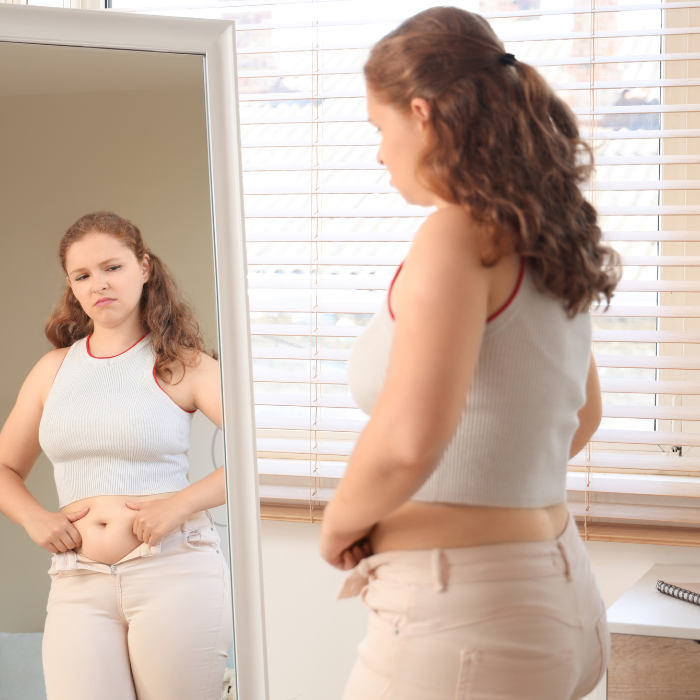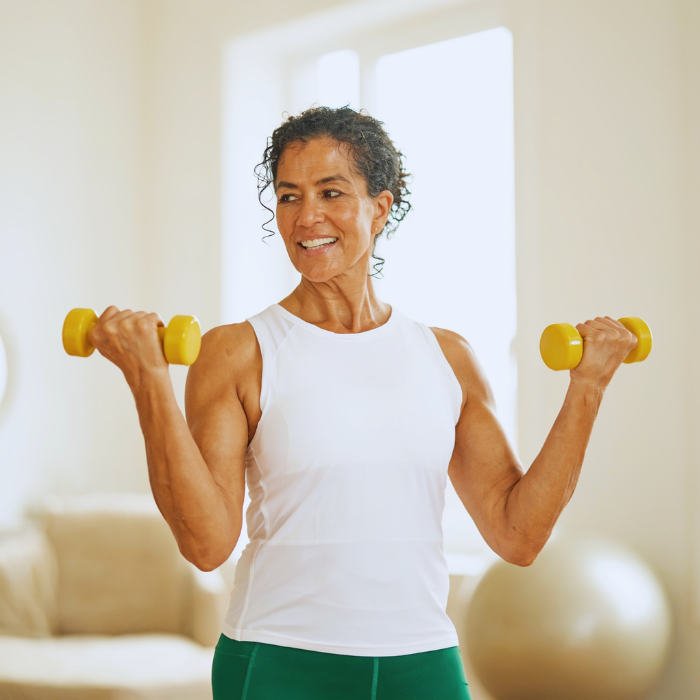
You may have heard that you need to lift heavy weights, exercise every day, or follow a special menopause workout.
The good news is that staying active doesn't have to be complicated.
Exercise during menopause can help you maintain muscle, support bone health, improve balance, and feel more comfortable in everyday life.
Strength training is especially valuable, but walking, swimming, stretching, and other activities also have important benefits.
You don't need to be an athlete or join a gym to get started.
The most useful exercise routine is one that fits your abilities, health, and everyday schedule.
Key Takeaways
- Exercise during menopause supports strength, mobility, cardiovascular health, and overall well-being.
- Strength training helps maintain muscle and everyday physical function.
- Declining estrogen can accelerate bone loss around menopause.
- Weight-bearing activity and resistance training can support bone health.
- Balance exercises help improve stability and reduce fall risk.
- General guidelines recommend 150 minutes of moderate aerobic activity weekly and strength training at least twice a week.
- Beginners can start with much less activity and build gradually.
- Walking is valuable but works best as part of a balanced activity routine.
- Exercise isn't a proven stand-alone treatment for hot flashes or menopause-related belly fat.
- Women with osteoporosis, fractures, or certain health conditions may need exercise modifications.
- Progress is measured by strength, comfort, endurance, and health, not only body weight.
- A sustainable routine is more useful than an extreme workout plan.
Why Is Exercise Important During Menopause?
Menopause is a natural stage of life, but it brings changes that can affect physical health.
As estrogen levels decline, bone loss can speed up, especially during the years around the final menstrual period.
At the same time, aging and changes in physical activity can affect muscle mass, strength, and endurance.
Some women also experience disrupted sleep, joint discomfort, or changes in body composition.
Regular physical activity can help address several of these concerns.
Exercise may support:
- Muscle strength and everyday movement.
- Bone health.
- Balance and coordination.
- Heart and blood vessel health.
- Sleep quality.
- Mood and emotional well-being.
- Healthy blood pressure and blood sugar.
- Maintaining independence as you get older.
Exercise isn't a cure for menopause symptoms, and it doesn't replace medical treatment when needed.
But it is one of the most useful habits for supporting health throughout midlife and beyond.
What Happens to Muscle During Menopause?
Muscle helps you do much more than exercise.
You use it to carry groceries, climb stairs, get out of a chair, maintain balance, and complete everyday activities.
As adults age, they tend to lose some muscle mass and strength.
This process is influenced by activity levels, nutrition, illness, and other factors.
Changes in hormones around menopause may also affect muscle and body composition, although aging and menopause often overlap.
When muscle strength declines, everyday activities can begin to feel more difficult.
That's one reason strength training during menopause deserves attention.
Maintaining muscle isn't just about appearance or weight. It's about staying capable, mobile, and independent.
Strength Training During Menopause: Why It Matters
Strength training means working your muscles against resistance.
That resistance might come from weights, resistance bands, exercise machines, or your own body weight.
Over time, these activities can improve muscle strength and physical function.
They may also help maintain bone strength when exercises place appropriate loads on the skeleton.
Do You Have to Lift Heavy Weights?
No.
Heavy resistance training can be effective for some women, but it isn't the only way to build strength.
A beginner may benefit from simple movements such as standing up from a chair, using light dumbbells, or exercising with resistance bands.
As your muscles become stronger, you can gradually increase the challenge.
This is called progressive resistance training.
It means making exercise a little more demanding over time as your body adapts.
For example, you might begin with a light weight and later increase it when the movement becomes easier.
The goal is steady progress, not lifting as much as possible.
Simple Strength Exercises to Consider
Depending on your fitness and medical history, exercises may include:
- Chair sit-to-stands: Strengthen the legs and support everyday mobility.
- Wall push-ups: Work the arms, chest, and shoulders.
- Resistance-band rows: Strengthen muscles in the upper back.
- Step-ups: Challenge the legs and balance.
- Light dumbbell exercises: Build strength in the arms and shoulders.
- Calf raises: Strengthen the lower legs and support stability.
You don't need to perform every exercise.
Choose movements that feel appropriate and that you can perform with good control.
If you're unsure about technique, a qualified exercise professional or physical therapist can help.
How Often Should You Do Strength Training?
General physical activity guidelines recommend muscle-strengthening activities at least two days per week.
These activities should work the major muscle groups, including the legs, hips, back, abdomen, chest, shoulders, and arms.
For beginners, two nonconsecutive strength-training days can be a reasonable starting point.
You might begin with one set of several manageable exercises.
As your confidence and strength improve, you can gradually increase repetitions, resistance, or the number of sets.
Allow time for recovery between demanding workouts.
And remember that progress doesn't need to happen every week.
Illness, sleep problems, joint discomfort, and other circumstances may require adjustments.
Consistency over time matters more than completing a perfect workout.
Exercise for Bone Health After Menopause
Bone health becomes especially important after menopause.
Estrogen helps regulate the normal process of bone renewal.
When estrogen levels decline, bone breakdown can outpace bone formation.
This can lead to lower bone density over time.
Some women develop osteoporosis, a condition that makes bones weaker and more likely to fracture.
Exercise is one important part of supporting bone health.
But different types of exercise affect bones in different ways.
Weight-Bearing Exercise
Weight-bearing activities require your body to support its weight against gravity.
Examples include:
- Walking.
- Dancing.
- Hiking.
- Stair climbing.
- Certain low-impact aerobic exercises.
These activities help maintain physical function and can contribute to bone health.
The amount of benefit depends on factors such as exercise intensity, frequency, and individual bone health.
Resistance Training
Strength exercises place controlled forces on muscles and bones.
Appropriately designed resistance training can help maintain or improve bone strength and physical function.
It can also strengthen muscles that support balance and help reduce the risk of falls.
What About Swimming and Cycling?
Swimming and cycling are excellent activities for cardiovascular fitness and endurance.
They can be particularly useful for women with certain joint problems.
However, because they don't place the same weight-bearing forces on bones, they generally provide less direct bone-loading benefit than appropriate weight-bearing or resistance exercises.
That doesn't mean you should stop swimming or cycling.
It means you may benefit from combining them with other activities when your health allows.
What if You Have Osteoporosis?
If you've been diagnosed with osteoporosis, exercise is still important.
However, your routine may need to be adapted.
Some movements that involve repeated or forceful bending and twisting of the spine can increase fracture risk, particularly in people with osteoporosis or previous vertebral fractures.
High-impact activities and heavy lifting may also require individual assessment.
A physical therapist or exercise professional experienced in osteoporosis can help you choose appropriate strengthening, posture, and balance exercises.
Don't assume that every exercise advertised as bone-building is safe for someone with osteoporosis.
Exercise supports bone health, but it doesn't replace recommended bone-density screening or osteoporosis treatment.
If you're unsure about your fracture risk, discuss it with your healthcare professional.
Why Balance Exercises Matter
Balance is easy to overlook until you begin noticing changes.
You may feel less steady on uneven ground or when standing on one leg.
Balance depends on muscle strength, vision, nerves, coordination, and other systems.
Practicing balance can help improve stability and reduce fall risk.
Examples include:
- Standing with your feet closer together.
- Practicing a heel-to-toe walk.
- Standing on one leg while holding a sturdy counter.
- Tai chi.
- Controlled stepping exercises.
If you're at risk of falling, practice near a stable support or with professional guidance.
Don't attempt difficult balance exercises without something secure nearby.
The goal is to become steadier, not to challenge yourself to the point of falling.
Is Walking Enough Exercise During Menopause?
Walking is an excellent way to stay active.
It supports cardiovascular health, endurance, mood, and everyday mobility.
You can adjust the pace and distance to fit your abilities.
But walking alone may not provide all the benefits of a balanced exercise program.
Strength training challenges muscles in ways that ordinary walking may not.
Balance exercises can also provide additional benefits, particularly as you get older.
A practical approach is to combine walking with some form of resistance training and balance practice.
That doesn't mean you need a complicated weekly schedule.
Even a few simple strength exercises at home can complement regular walks.
How Much Exercise Should Women Get During Menopause?
General U.S. physical activity guidelines, as summarized by the CDC, recommend that adults aim for:
- At least 150 minutes of moderate-intensity aerobic activity each week, or 75 minutes of vigorous activity, or an equivalent combination.
- Muscle-strengthening activities on at least two days per week.
Moderate-intensity activity means you're breathing faster but can still talk.
A brisk walk is one example.
These guidelines are goals, not a reason to avoid exercise if you can't meet them yet.
Some physical activity is better than none.
If you're starting from a low activity level, begin with manageable amounts and build gradually.
Women with mobility limitations or medical conditions can often benefit from adapted activity.
A healthcare professional or physical therapist can help identify appropriate options.
How to Start Exercising During Menopause
Starting a new routine can feel overwhelming, especially if you've been inactive for a while.
You don't need to change everything at once.
Begin with a few activities that feel manageable.
A Simple Beginner Weekly Plan
This is an example for a generally healthy adult who can exercise safely. Adjust it to your fitness and abilities.
| Day | Activity | Suggested starting point |
|---|---|---|
| Monday | Walking and light strength | 15 to 20 minute walk plus a few strength exercises |
| Tuesday | Comfortable movement | Short walk or gentle mobility exercises |
| Wednesday | Strength training | 15 to 25 minutes using bands, weights, or bodyweight |
| Thursday | Walking | 20 to 30 minutes at a comfortable pace |
| Friday | Balance and mobility | 10 to 15 minutes of supported balance and stretching |
| Saturday | Strength and walking | Short strength session plus an optional walk |
| Sunday | Recovery or enjoyable movement | Rest, gentle walking, or another comfortable activity |
You can shorten these sessions, spread activity into smaller periods, or add recovery days.
If you're new to strength training, Monday and Friday could be your two main strength days instead.
The exact schedule matters less than choosing activities you can continue safely.
Start With What You Can Do Today
If a 20-minute walk feels too difficult, begin with five minutes.
If standing exercises are uncomfortable, consider seated exercises or other adapted movements.
If you have joint pain, choose activities that place less stress on the affected joints.
Your starting point is simply where you are now.
What if You're Dealing With Fatigue or Poor Sleep?
Fatigue can make exercise more difficult during perimenopause.
You may be sleeping poorly because of night sweats, insomnia, or other health concerns.
On days when your energy is low, consider reducing the intensity or duration of your workout.
A short walk or gentle mobility session may feel more manageable than a demanding strength session.
But severe or persistent fatigue shouldn't simply be pushed through.
If you're unusually exhausted, becoming breathless with ordinary activity, or experiencing a significant decline in exercise tolerance, seek medical advice.
Our article Menopause Fatigue: Possible Causes and When to Get Help explains why low energy may need evaluation.
Can Exercise Help Hot Flashes and Night Sweats?
Regular physical activity has many health benefits, but research hasn't consistently shown that exercise directly reduces hot flashes.
Some women feel better overall when they're active.
Exercise may improve mood, sleep, and fitness, which can make the menopause transition easier to manage.
But you shouldn't feel that you're doing something wrong if hot flashes continue despite exercising regularly.
Effective medical treatments are available for troublesome hot flashes and night sweats.
Exercise is a valuable health habit, not a replacement for symptom treatment.
What About Joint Pain and Stiffness?
Some women notice more joint aches or stiffness around menopause.
But joint symptoms can also result from arthritis, injuries, overuse, or other conditions.
Movement can help maintain joint mobility and muscle strength.
Low-impact activities such as walking, swimming, cycling, and gentle resistance exercises may be useful.
If an exercise causes sharp pain or makes symptoms consistently worse, stop and reassess.
Persistent swelling, redness, warmth, or significant joint pain should be evaluated.
You don't need to force yourself through pain to benefit from exercise.
A physical therapist can help adapt activities when joint discomfort limits movement.
Does Exercise Help With Menopause Weight Gain?
Physical activity can support weight management and metabolic health.
Strength training is especially helpful for preserving muscle during midlife.
However, exercise doesn't allow you to choose where your body loses fat.
Abdominal workouts, for example, can strengthen your core but won't specifically remove belly fat.
Menopause-related changes in fat distribution involve hormones, aging, genetics, and other factors.
Exercise can improve fitness, strength, blood pressure, and blood sugar even when body weight changes very little.
Our article Menopause Weight Gain and Belly Changes: A Practical Approach explains why the scale isn't the only measure of progress.
Can Exercise Improve Mood and Sleep?
Yes, regular physical activity can support emotional well-being and sleep.
Some women find that walking or other movement helps them feel less tense.
Exercise can also provide structure and opportunities for social connection.
However, exercise isn't a substitute for appropriate treatment of significant anxiety, depression, or chronic insomnia.
If mood or sleep symptoms are interfering with your life, seek professional support.
A combination of movement, sleep care, and medical or psychological treatment may be useful.
Should You Exercise Every Day?
You can move your body every day, but you don't need to perform a demanding workout daily.
Walking, stretching, and comfortable everyday movement may fit well into most days.
Harder strength sessions generally require some recovery time.
Rest is part of a balanced routine.
The amount of recovery you need depends on exercise intensity, your fitness, sleep, and overall health.
If you're constantly sore, unusually tired, or losing motivation because workouts feel exhausting, your routine may need adjustment.
A sustainable plan is better than one that leaves you depleted.
When Should You Talk to a Healthcare Professional Before Exercising?
Most generally healthy adults can begin with light or moderate activity and gradually build up.
However, medical advice is especially important if you have:
- Known heart or lung disease with symptoms or activity restrictions.
- Osteoporosis with previous fractures.
- Significant balance problems or repeated falls.
- Severe joint pain or mobility limitations.
- New unexplained shortness of breath.
- Dizziness or fainting during activity.
- A medical condition that limits your ability to exercise safely.
You may also benefit from professional guidance if you're returning to activity after surgery or a major illness.
Warning Signs During Exercise
Stop exercising and seek urgent medical attention for chest pain, severe shortness of breath, fainting, or sudden neurological symptoms.
Unusual symptoms should not be dismissed as menopause or simply being out of shape.
Frequently Asked Questions
What is the best exercise during menopause?
A combination of strength training, aerobic activity, and balance exercises supports different aspects of health.
The best routine depends on your abilities, preferences, and medical history.
Is strength training during menopause safe?
Strength training is generally safe and beneficial when exercises and resistance levels are appropriate.
Women with osteoporosis, injuries, or certain medical conditions may need modifications.
How often should women lift weights during menopause?
General guidelines recommend muscle-strengthening activities at least twice a week.
Beginners can start with manageable resistance and increase gradually.
What exercise is best for bone health after menopause?
Weight-bearing activities and appropriately designed resistance training can support bone health.
Balance exercises also help reduce fall risk.
People with osteoporosis may need individualized guidance.
Can walking prevent osteoporosis?
Walking supports health and mobility, but it may not provide enough bone-loading stimulus on its own to prevent osteoporosis.
Strength training, nutrition, screening, and medical treatment when needed are also important.
Can exercise reduce menopause belly fat?
Exercise supports overall body composition and metabolic health, but no workout can reliably target abdominal fat alone.
How do you start exercising during menopause if you're out of shape?
Begin with short, comfortable sessions such as walking, chair exercises, or light resistance training.
Increase gradually, and ask for professional guidance if health conditions or symptoms limit activity.
Building Strength for the Years Ahead
Exercise during menopause isn't about trying to make your body look the way it did twenty years ago.
It's about supporting the body you have today and preparing it for the years ahead.
Stronger muscles can make everyday tasks easier.
Better balance can help you feel steadier.
Regular movement supports your heart, bones, mood, and overall health.
And you don't have to achieve everything at once.
Start with a manageable routine, build gradually, and choose activities you enjoy enough to keep doing.
The goal is to feel stronger, more capable, and more comfortable in everyday life.
What Should You Read Next?
For the bone-health side of the picture, read Calcium and Vitamin D During Menopause: Food and Safe Intake.
For food and everyday habits, read Nutrition and Healthy Living During Menopause: Food, Strength, and Well-Being.
And for body changes in midlife, read Menopause Weight Gain and Belly Changes: A Practical Approach.

Want the Bigger Picture?
Download our free Menopause Living Well Guide for practical information about menopause symptoms, nutrition, movement, bone health, sleep, and treatment options.
Small, consistent steps can help support your health during menopause and beyond.
We respect your privacy. No spam. See our Privacy Policy.
Sources
This article is for general educational purposes only and is not medical advice. It is not intended to diagnose, treat, cure, or prevent any condition. Always talk with a qualified healthcare professional about your health.