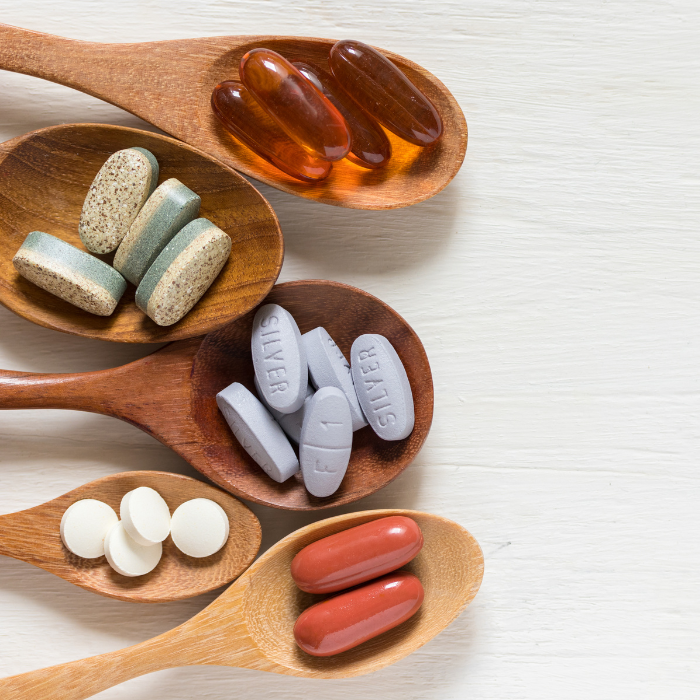
But how much do you actually need? Can you get enough from food? And is it safe to take calcium and vitamin D supplements together?
These are important questions because bone health becomes especially relevant during the menopause transition.
Calcium and vitamin D help maintain healthy bones, but taking more than your body needs doesn't necessarily provide extra protection.
Many women can get much of their calcium through everyday foods. Vitamin D can be more difficult to obtain through diet alone, but that doesn't mean everyone needs a high-dose supplement.
Understanding your needs can help you make informed choices without spending money on products you may not need.
Key Takeaways
- Calcium and vitamin D are essential nutrients for bone health.
- Bone loss can accelerate around menopause as estrogen levels decline.
- Women ages 51 and older generally need 1,200 mg of calcium daily.
- Most adults through age 70 need 600 IU of vitamin D daily; adults 71 and older need 800 IU.
- Calcium-rich foods are generally the preferred starting point.
- Calcium and vitamin D supplements can be taken together when appropriate.
- Check overlapping ingredients in multivitamins, bone-health products, and other supplements.
- Taking more than recommended doesn't guarantee stronger bones.
- Excessive calcium or vitamin D intake can cause harm.
- Supplements may interact with medications.
- Exercise, fall prevention, appropriate screening, and medical treatment are also important.
- A pharmacist or healthcare professional can help you determine what you actually need.
Why Are Calcium and Vitamin D Important During Menopause?
Your bones are living tissue.
Throughout life, your body breaks down older bone and replaces it with new bone.
This process helps maintain bone strength.
Estrogen plays an important role in regulating bone renewal.
As estrogen levels decline during menopause, bone breakdown can increase.
For some women, bone loss becomes faster during the years around the final menstrual period.
Over time, this may increase the risk of osteoporosis.
Osteoporosis is a condition in which bones become weaker and more likely to fracture.
Calcium and vitamin D are important because they help support the normal processes involved in bone health.
However, they're only part of the picture.
Physical activity, adequate nutrition, smoking, alcohol use, medical conditions, medications, and family history can also affect bone strength.
Getting enough calcium and vitamin D matters, but supplements alone cannot guarantee that you'll prevent osteoporosis.
What Does Calcium Do for Your Body?
Calcium is a mineral that helps build and maintain bones and teeth.
Your body also uses calcium for muscle movement, nerve signaling, and normal blood clotting.
Most of the calcium in your body is stored in your bones and teeth.
When your diet doesn't provide enough calcium, your body may draw calcium from your bones to maintain normal blood calcium levels.
Over time, inadequate intake can contribute to poor bone health.
That's why getting enough calcium throughout adulthood is important.
But the goal is adequate intake, not consuming as much calcium as possible.
What Does Vitamin D Do?
Vitamin D helps your body absorb calcium from food.
Without enough vitamin D, calcium absorption becomes less efficient.
Vitamin D also supports normal muscle and nerve function.
Your body can make vitamin D when skin is exposed to sunlight, and you can obtain it from certain foods and supplements.
However, vitamin D production from sunlight varies with season, latitude, skin pigmentation, age, clothing, and other factors.
Sun exposure also carries skin-cancer risks, so deliberately increasing unprotected sun exposure isn't a recommended way to meet vitamin D needs.
For some women, food and appropriate supplementation may be more reliable sources.
How Much Calcium Do Women Need During Menopause?
Calcium recommendations are based mainly on age rather than menopause status alone.
According to the National Institutes of Health, recommended daily calcium intake for adult women is:
| Age | Recommended calcium per day |
|---|---|
| Women ages 19 to 50 | 1,000 mg |
| Women ages 51 and older | 1,200 mg |
These amounts include calcium from both food and supplements combined.
For example, a 55-year-old woman whose diet provides approximately 900 mg of calcium doesn't necessarily need a 1,200 mg calcium supplement.
Her total intake is what matters.
Women who experience menopause at an earlier age may need an individualized bone-health assessment, but they shouldn't automatically assume they need large calcium doses.
A healthcare professional can help review their overall risk.
How to Get Enough Calcium After Menopause
Food is generally the best place to start.
Calcium-rich foods provide calcium along with other nutrients, such as protein and phosphorus.
Some also contain vitamin D.
You don't need to rely only on dairy products.
There are several ways to include calcium in your meals.
Calcium-Rich Foods
| Food | Approximate calcium |
|---|---|
| --- | ---: |
| Plain low-fat yogurt, 8 oz | 400 to 450 mg |
| Milk, 1 cup | 300 mg |
| Calcium-fortified soy milk, 1 cup | 300 mg |
| Cheddar cheese, 1.5 oz | 300 mg |
| Calcium-set tofu, ½ cup | Varies widely; check the label |
| Canned sardines with bones, 3 oz | 325 mg |
| Cooked collard greens, 1 cup | 250 mg |
| Cooked kale, 1 cup | 100 mg |
These amounts are approximate and vary by product, preparation, and serving size.
Check nutrition labels when possible, especially for fortified plant-based milks and tofu.
Not every plant-based milk contains the same amount of calcium.
A Simple Example of Calcium From Food
Suppose your daily meals include:
- One cup of milk or calcium-fortified soy milk: approximately 300 mg.
- One serving of yogurt: approximately 400 mg.
- A serving of cooked greens: approximately 200 mg.
- Other foods throughout the day: additional calcium.
You could obtain a substantial portion of your daily calcium requirement without taking a supplement.
The exact amount depends on your food choices and serving sizes.
You don't need to calculate every milligram every day.
But checking your typical intake can help you understand whether you're regularly falling short.
What if You Don't Eat Dairy?
You can still obtain calcium without dairy products.
Options include calcium-fortified plant beverages, calcium-set tofu, certain leafy greens, beans, and canned fish with edible bones.
The amount of calcium your body absorbs also matters.
For example, spinach contains calcium, but it also contains oxalates that reduce calcium absorption.
That makes spinach a less reliable source of usable calcium than some other leafy greens.
If you avoid dairy and struggle to meet your calcium needs, a registered dietitian can help you plan meals.
A supplement may be appropriate if your diet consistently provides too little calcium.
How Much Vitamin D Do Women Need?
Vitamin D recommendations are also based mainly on age.
According to the National Institutes of Health, the recommended dietary allowance for most adults is:
| Age | Recommended vitamin D per day |
|---|---|
| Adults ages 19 to 70 | 600 IU (15 mcg) |
| Adults ages 71 and older | 800 IU (20 mcg) |
These recommendations assume minimal sun exposure and are intended to meet the needs of most healthy people.
Some people may need individualized advice because of medical conditions, malabsorption, medications, or other factors.
Menopause itself doesn't mean every woman needs a high-dose vitamin D supplement.
A healthcare professional can help determine whether your circumstances justify a different approach.
Which Foods Contain Vitamin D?
Vitamin D naturally occurs in relatively few foods.
Useful dietary sources include:
- Fatty fish such as salmon and trout.
- Fortified milk.
- Some fortified plant-based milks.
- Certain fortified breakfast cereals.
- Egg yolks.
- Some mushrooms exposed to ultraviolet light.
The amount varies.
For example, salmon can provide a meaningful amount of vitamin D, while an egg yolk contains a much smaller amount.
Fortified foods may help fill dietary gaps. NIH notes that almost all U.S. milk is fortified with about 120 IU of vitamin D per cup.
Check labels because not all brands contain added vitamin D.
Some women find it difficult to meet vitamin D recommendations through food alone.
That's one reason vitamin D supplements are commonly discussed.
However, the appropriate amount depends on total intake and individual needs.
Can You Take Calcium and Vitamin D Supplements Together?
Yes.
Calcium and vitamin D are often included in the same supplement because vitamin D supports calcium absorption.
For some women, taking both may be appropriate.
But taking calcium and vitamin D supplements together doesn't mean you should automatically take the maximum recommended amount of each.
The important question is how much you're getting from all sources combined.
For example, you might already take:
- A daily multivitamin containing vitamin D.
- A calcium supplement that also contains vitamin D.
- A separate vitamin D capsule.
If you don't check the labels, you may consume more vitamin D than you intended.
The same issue can occur with calcium.
Some meal-replacement drinks, protein powders, and fortified foods also contain added calcium or vitamin D.
Reviewing everything together helps avoid unnecessary overlap.
Should You Take a Calcium Supplement if You Eat Enough Calcium?
Usually, there isn't a good reason to add a calcium supplement simply because you've reached menopause if your diet already meets your needs.
Supplements can help fill nutritional gaps.
But they shouldn't automatically replace a balanced diet.
Some calcium supplements can cause constipation, bloating, or stomach discomfort.
High supplemental calcium intake may also increase kidney-stone risk in some people.
Research on calcium supplements and cardiovascular outcomes has produced mixed findings, so broad claims that calcium supplements either protect the heart or cause heart disease aren't justified.
The safest approach is to assess your intake and use supplements when there's a clear need.
Calcium Carbonate vs. Calcium Citrate: What's the Difference?
Two common forms of calcium supplements are calcium carbonate and calcium citrate.
Both can provide calcium, but there are practical differences.
Calcium Carbonate
Calcium carbonate generally contains more elemental calcium per tablet.
Elemental calcium is the actual amount of calcium available in the supplement.
Calcium carbonate is usually absorbed best when taken with food.
Calcium Citrate
Calcium citrate contains less elemental calcium by weight.
However, it can be taken with or without food and may be a better option for some people with reduced stomach acid.
The best choice depends on your needs, medications, digestive tolerance, and preferences.
A pharmacist can help you compare products.
Why Elemental Calcium Matters
A supplement label may say that a product contains calcium carbonate, but what matters for meeting your daily requirement is the listed amount of elemental calcium.
Read the Supplement Facts panel.
Also check the serving size.
A label may list an amount for two tablets rather than one.
Is It Better to Split Calcium Supplements Into Smaller Doses?
NIH says calcium is absorbed best when you take 500 mg or less at one time, and suggests splitting larger supplemental amounts into smaller doses.
If you need a larger supplemental amount, dividing it into separate doses may improve absorption.
For example, if a healthcare professional recommends 600 mg of supplemental calcium daily, you may be advised to divide it into two smaller doses.
But the exact schedule depends on the product and your needs.
Follow your healthcare professional's or pharmacist's advice.
Remember that the goal is to make up a dietary shortfall, not automatically add large amounts of calcium.
Can You Take Too Much Calcium?
Yes.
Calcium is essential, but excessive intake can cause problems.
For adults ages 51 and older, the NIH lists a tolerable upper intake level of 2,000 mg of calcium per day from all sources combined.
For adults ages 19 to 50, the upper limit is 2,500 mg daily.
An upper limit isn't a target.
It's the highest average daily intake considered unlikely to cause harm for most healthy people.
Too much calcium may contribute to constipation, kidney stones, and other problems.
Certain health conditions may require additional precautions.
If you already get adequate calcium from food, adding a large supplement can push your intake unnecessarily high.
Can You Take Too Much Vitamin D?
Yes.
Vitamin D is fat-soluble, meaning it can be stored in the body.
Excessive vitamin D supplementation can cause calcium levels in the blood to become too high.
This may lead to symptoms such as nausea, weakness, frequent urination, confusion, and kidney problems.
For most adults, the NIH lists a tolerable upper intake level of 4,000 IU (100 mcg) of vitamin D per day.
This isn't a recommended daily dose.
Some people with specific medical conditions may be prescribed higher doses for a limited period under medical supervision.
But routinely taking high-dose vitamin D without a clear reason isn't a good strategy for protecting bones.
More vitamin D doesn't automatically mean stronger bones.
Do You Need a Vitamin D Blood Test?
Not everyone needs routine vitamin D testing.
A healthcare professional may recommend a blood test when there are risk factors for deficiency, certain medical conditions, signs of bone disease, or other clinical reasons.
The test commonly used measures 25-hydroxyvitamin D in the blood. NIH describes 20 ng/mL (50 nmol/L) or above as adequate for most people.
However, routine screening in otherwise healthy adults without symptoms or specific risk factors isn't universally recommended.
And vitamin D test results need to be interpreted in context.
If you're concerned about deficiency, ask whether testing would help guide your care.
Don't assume that every woman in menopause needs frequent vitamin D blood tests.
Do Calcium and Vitamin D Prevent Osteoporosis?
Adequate calcium and vitamin D support normal bone health.
But their ability to prevent fractures depends on the individual, baseline intake, and other factors.
For generally healthy adults living independently in the community, evidence doesn't support a blanket recommendation that everyone take calcium and vitamin D supplements solely to prevent fractures.
People with low dietary intake, vitamin D deficiency, osteoporosis, malabsorption, or other specific risks may have different needs.
Calcium and vitamin D may also be part of a broader osteoporosis treatment plan.
Supplements cannot replace osteoporosis medications when those medications are medically indicated.
Bone health also depends on physical activity, fall prevention, nutrition, and appropriate screening.
Exercise Is Another Important Part of Bone Health
Calcium and vitamin D work best as part of a broader approach to maintaining bone strength.
Weight-bearing activities and resistance training can help support bones and muscles.
Balance exercises can also reduce fall risk.
Useful activities may include walking, strength training, dancing, and appropriate balance practice.
If you have osteoporosis or a history of fractures, your exercise routine may need modification.
For more on getting started safely, read Exercise During Menopause: Strength, Bones, and Everyday Comfort.
When Should You Ask About a Bone Density Test?
A bone density test, commonly called a DXA scan, measures bone mineral density.
In the United States, osteoporosis screening is generally recommended for women ages 65 and older.
Screening is also recommended for postmenopausal women younger than 65 who have an increased fracture risk based on clinical assessment.
Risk factors may include a previous fragility fracture, certain medications, low body weight, and some medical conditions.
A healthcare professional can help determine whether testing is appropriate.
You don't need to wait for a fracture before discussing bone health.
And you don't need to assume that taking calcium supplements means your bones are adequately protected.
Can Calcium and Vitamin D Interact With Medications?
Yes.
Calcium supplements can interfere with the absorption of certain medications.
Examples include some thyroid medications and antibiotics.
Calcium may need to be taken several hours apart from these medicines. For example, NIH notes that levothyroxine absorption can drop if it is taken within four hours of calcium carbonate, and that quinolone antibiotics such as ciprofloxacin should be taken at least two hours apart from calcium.
Vitamin D can also interact with certain medications, and medical conditions affecting calcium balance may require special care.
That's why it's important to tell your pharmacist or healthcare professional about every supplement you're taking.
Don't assume that vitamins and minerals are free of medication interactions.
How to Review Your Supplements Safely
Before adding a calcium or vitamin D supplement, take a few minutes to review what you're already using.
A practical approach is to:
- Estimate how much calcium you usually get from food.
- Check whether your multivitamin contains calcium or vitamin D.
- Review any separate bone-health supplements.
- Check the serving size and amount per serving.
- Look for overlapping ingredients in other products.
- Ask your pharmacist or healthcare professional whether the combination is appropriate.
This can be especially helpful if you take several supplements.
Our article How to Choose a Menopause Supplement: Evidence and Safety offers more guidance on evaluating supplement claims and labels.
When Should You Seek Medical Advice?
Consider discussing calcium, vitamin D, and bone health with a healthcare professional if:
- You've been diagnosed with osteoporosis or osteopenia.
- You've had a fracture after a minor fall or injury.
- You experienced menopause before age 45.
- You have a condition that affects nutrient absorption.
- You have kidney disease or a history of kidney stones.
- You take medications that affect bone health or interact with supplements.
- You avoid major food groups and may not be meeting your nutritional needs.
- You're considering high-dose vitamin D.
- You're taking several products that contain overlapping calcium or vitamin D.
A professional can help you decide whether dietary changes, supplementation, testing, or other treatment is appropriate.
Frequently Asked Questions
How much calcium do you need after menopause?
Women ages 51 and older generally need 1,200 mg of calcium per day from food and supplements combined.
Women ages 19 to 50 generally need 1,000 mg daily.
How much vitamin D should women take during menopause?
The recommended intake is 600 IU daily for most adults through age 70 and 800 IU daily beginning at age 71.
Individual needs may differ.
Can you take calcium and vitamin D supplements together?
Yes.
They can be taken together, and many supplements contain both.
Check the total amount from all products to avoid excessive intake.
Is it better to get calcium from food or supplements?
Food is generally the preferred starting point.
Supplements may be useful when your diet doesn't provide enough calcium or when a healthcare professional recommends them.
Does taking more calcium make bones stronger?
Not necessarily.
Getting enough calcium is important, but consuming more than recommended doesn't guarantee additional bone protection and may cause harm.
Should every woman take vitamin D after menopause?
Not automatically.
Vitamin D intake matters, but the need for a supplement depends on diet, age, medical conditions, and other factors.
Do calcium and vitamin D supplements prevent fractures?
They may be appropriate for people with deficiencies or certain bone-health risks, but routine supplementation isn't proven to prevent fractures in every healthy adult.
Bone health requires a broader approach.
Supporting Your Bones Without Overcomplicating It
Bone health matters during menopause, but protecting your bones doesn't have to begin with a cabinet full of supplements.
Start by looking at your everyday diet.
Are you regularly eating foods that provide calcium? Are you getting vitamin D through food or an appropriate supplement when needed?
Are you staying active and including exercises that support muscle and bone strength?
And have you discussed your fracture risk with a healthcare professional?
The goal is to get enough calcium and vitamin D, not as much as possible.
For some women, food and healthy habits will provide a strong foundation.
Others may need supplements, bone-density testing, or medical treatment.
Understanding your individual needs is the best way to make informed choices.
What Should You Read Next?
For a framework for judging any product, read How to Choose a Menopause Supplement: Evidence and Safety.
For a broader look at food and healthy habits, read Nutrition and Healthy Living During Menopause: Food, Strength, and Well-Being.
And if you're thinking about body composition and strength, read Menopause Weight Gain and Belly Changes: A Practical Approach.

Want the Bigger Picture?
Download our free Menopause Living Well Guide for practical information about menopause symptoms, nutrition, strength, bone health, supplements, and treatment options.
Understanding your needs can help you make confident, informed decisions throughout menopause and beyond.
We respect your privacy. No spam. See our Privacy Policy.
Sources
This article is for general educational purposes only and is not medical advice. It is not intended to diagnose, treat, cure, or prevent any condition. Always talk with a qualified healthcare professional about your health.